Biography
The Latvian painter Edgars Vinters was born in 1919 in Riga, in Purvciems, into the family of a decorative painter. The house on Kurmju Street, built by his grandfather, was where the artist spent his entire life.
After completing primary school, Vinters enrolled in a commercial school; however, his interest in drawing had already manifested itself in childhood. Encouraged by his parents, he also turned to music – he learned to play the violin and performed in a church orchestra. At the age of 14, Vinters began collaborating with children’s and youth magazines “Cīrulītis”, “Latvijas Jaunatne”, “Mazpulks” and “Skolu Dzīve”, in which he published both drawings and short articles on art, painters and writers.
After graduating from commercial school in 1940, Vinters enrolled at the Art Academy of Latvia, where he studied in the Landscape Painting Department. During his studies, he supplemented his income by producing drawings for the newspaper Deutsche Zeitung im Ostland. However, in 1944 he was forced to interrupt his studies at the Academy and enlist in the Latvian Legion.
In 1945 he was taken prisoner by the Russian army and interned in a camp near Moscow. During his captivity, Russian officers recognised his talent and gave him the opportunity to establish an orchestra as well as to set up a painting studio. Having obtained special permission, Vinters was also allowed to leave the camp, which he used as an opportunity to visit art museums. A year later he was released from captivity and returned to Latvia.
He did not resume his studies at the Academy, as the Landscape Department had been closed. Vinters began working as a teacher of visual art and technical drawing, and at the same time attended the Janis Rozentāls Art Secondary School in order to obtain the qualifications required for teaching. He worked as an art teacher until 1979.
During the Soviet period, Vinters deliberately refused from joining the official artists’ organisations of the time, unwilling to subject his creative work to the ideological demands. He gained broader recognition and popularity as a painter in the 1990s, when both the visibility of his works and their appreciation increased among professionals and the wider public.
The painter died in 2014 in Riga.
Artistic Style
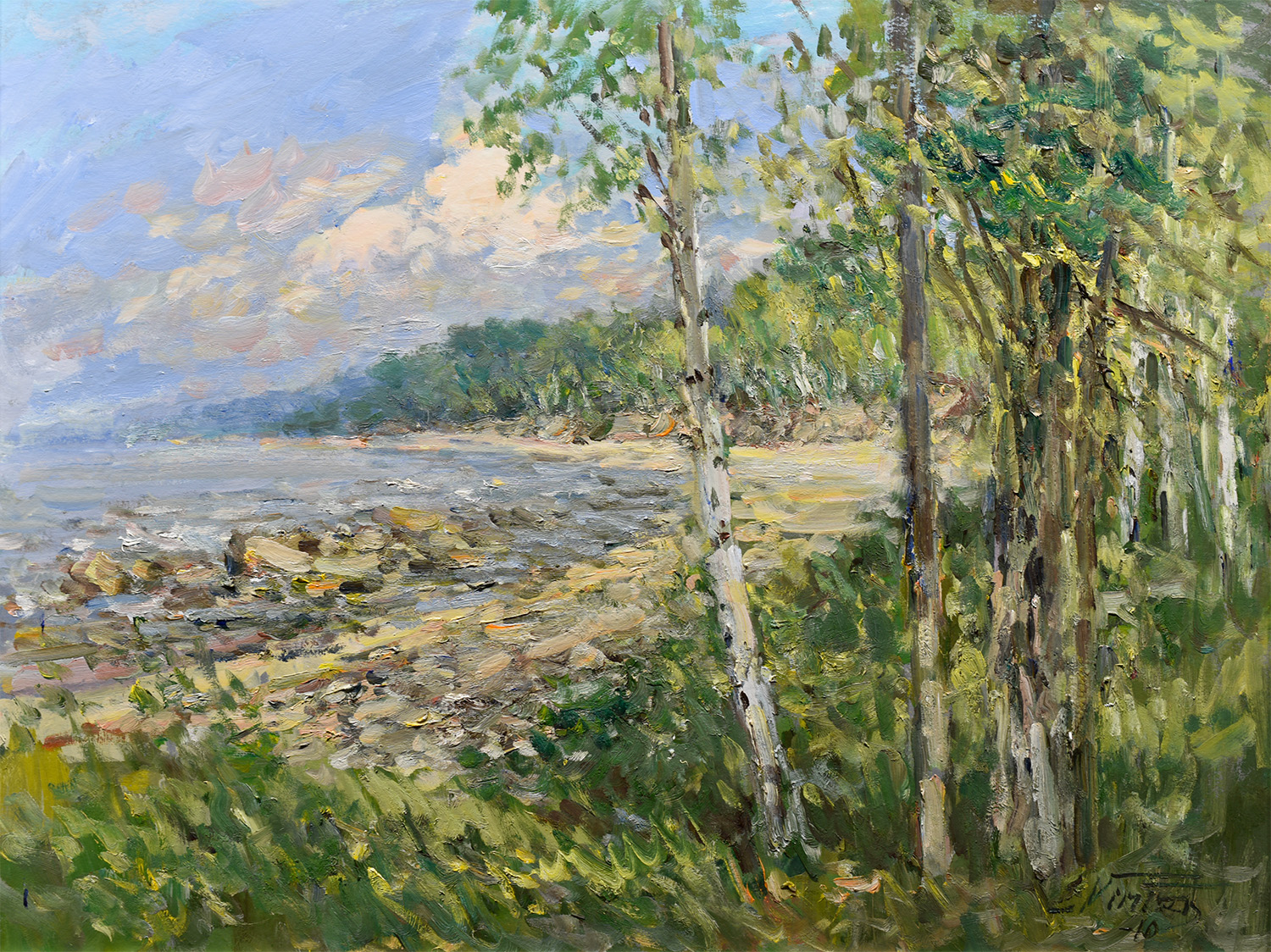
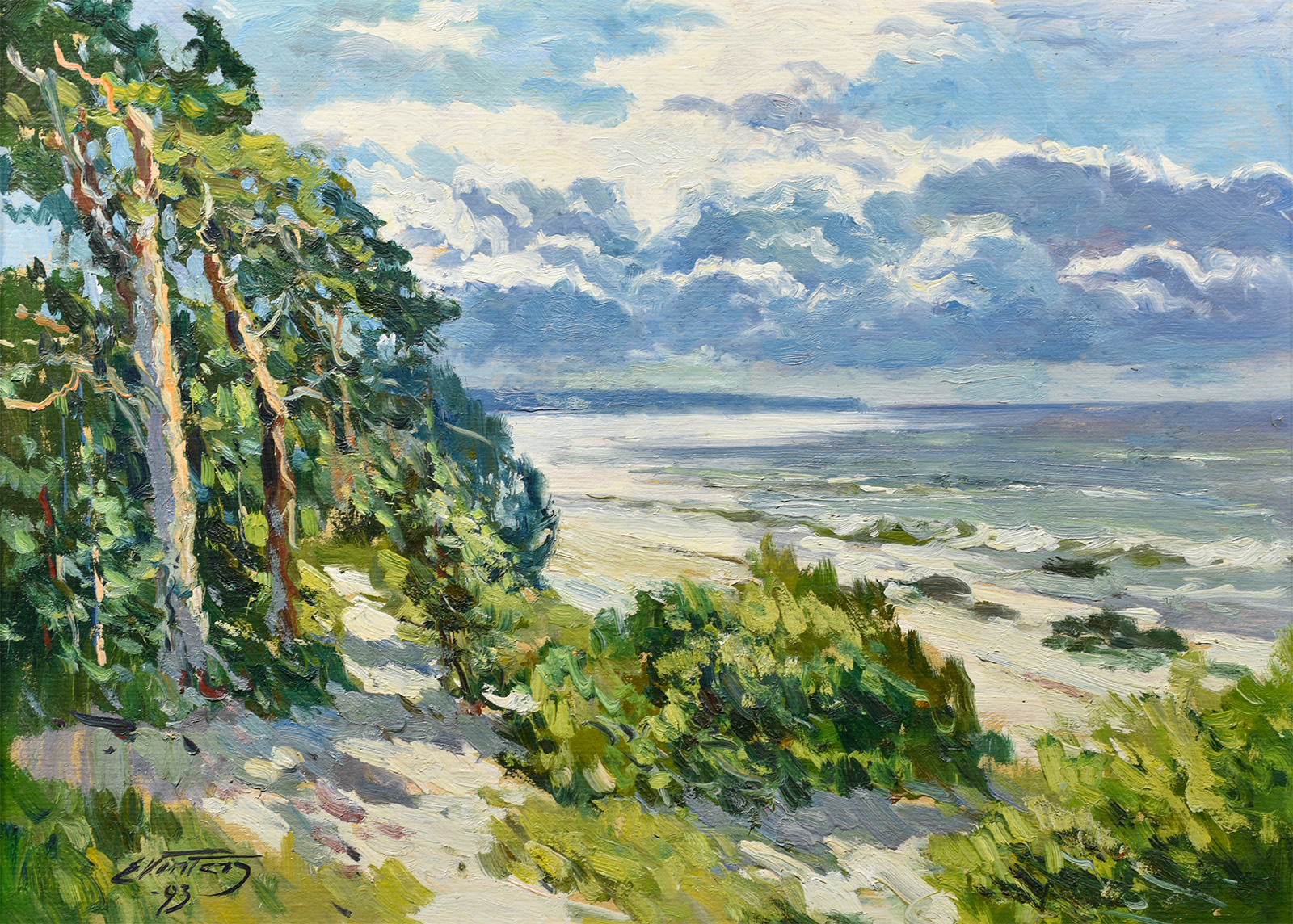
Vinters’ creative work is characterised by a consistent devotion to the genres of landscape and still life, a vivid treatment of light and colour, and painting en plein air. Latvian landscapes predominate in his paintings – views of nature, fragments of city scenes and floral motifs.
The early development of his talent was influenced by his encounter with the pastel painter Voldemārs Irbe (1893–1944), who, while Vinters was still a boy, encouraged his interest in nature and painting. A later and significant influence was the painter Hugo Kārlis Grotuss (1884–1951), whose luminous landscapes and flower paintings strongly appealed to the young artist. The formation of Vinters’ artistic manner was also shaped by his teachers at the Academy, Leo Svemps (1897–1975) and Konrāds Ubāns (1893–1981). An important source of inspiration was his interest in German Impressionists, in particular the landscape painter Walter Leistikow (1865–1908).
As a committed plein-air painter, Vinters worked on both canvas and cardboard, seeking a balance between expanses of water and sky, meadows, flowers and cornfields. His painting may be described as a poetic contemplation of what is seen and experienced, in which beauty is not idealised but exalted through simplicity, a free handling of texture and direct, unmediated observation. The vibrations of light, reflections of sunlight and sense of movement characteristic of the Impressionist manner are revealed in rhythmic and lively brushstrokes.
Vinters participated in exhibitions from the late 1940s onwards, primarily in Riga and other Latvian cities. In the 1990s he also had opportunities to exhibit his work in the United Kingdom and Germany. His works are held in the public collections of regional museums and galleries in Latvia, as well as in private collections in Latvia and abroad.
Interesting Facts
Vinters’ paintings were frequently selected as diplomatic gifts for ambassadors and heads of state, presented during official visits. In 2013, the President of Latvia presented a painting by Vinters to the President of Turkey as a state gift.
His works were regularly exhibited at the Roy Miles Gallery in London, where at one charity auction his painting “Tulips” was purchased by Diana, Princess of Wales.
In 2001, Vinters became acquainted with Hans Joachim Gerber, who at the time was an officer at NATO Headquarters and regularly visited the Baltic states. Gerber not only held Vinters’ work in high esteem, but also became an active promoter of his art and an initiator of publications devoted to it.